I trusted Lane Houk.
He pitched his “Signal Genesis” SEO software.
Here’s how it went wrong so you don’t repeat my mistake.
What Happened
In July 2022 I met Lane Houk at a “SevenFigure Agency” event.
He showed off his Signal Genesis software.
He claimed it would boost SEO by distributing your article across hundreds of press release sites.
I spent $10,500 upfront.
We onboarded.
But soon things stopped working.
Where the Warning Signs Showed Up
- The software never delivered the promised rankings.
- None of the pages we set up got indexed.
- Lane stopped responding.
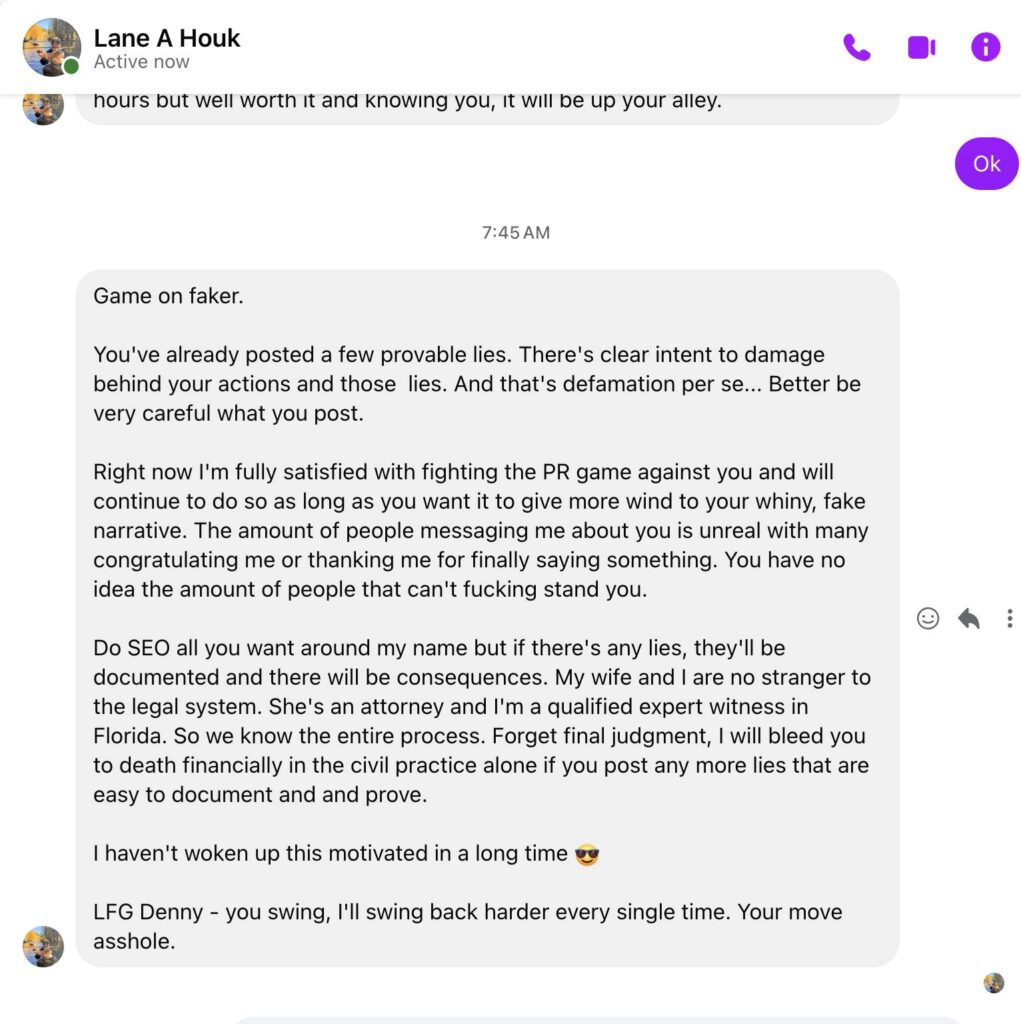
- He became defensive and accused me of not following instructions.
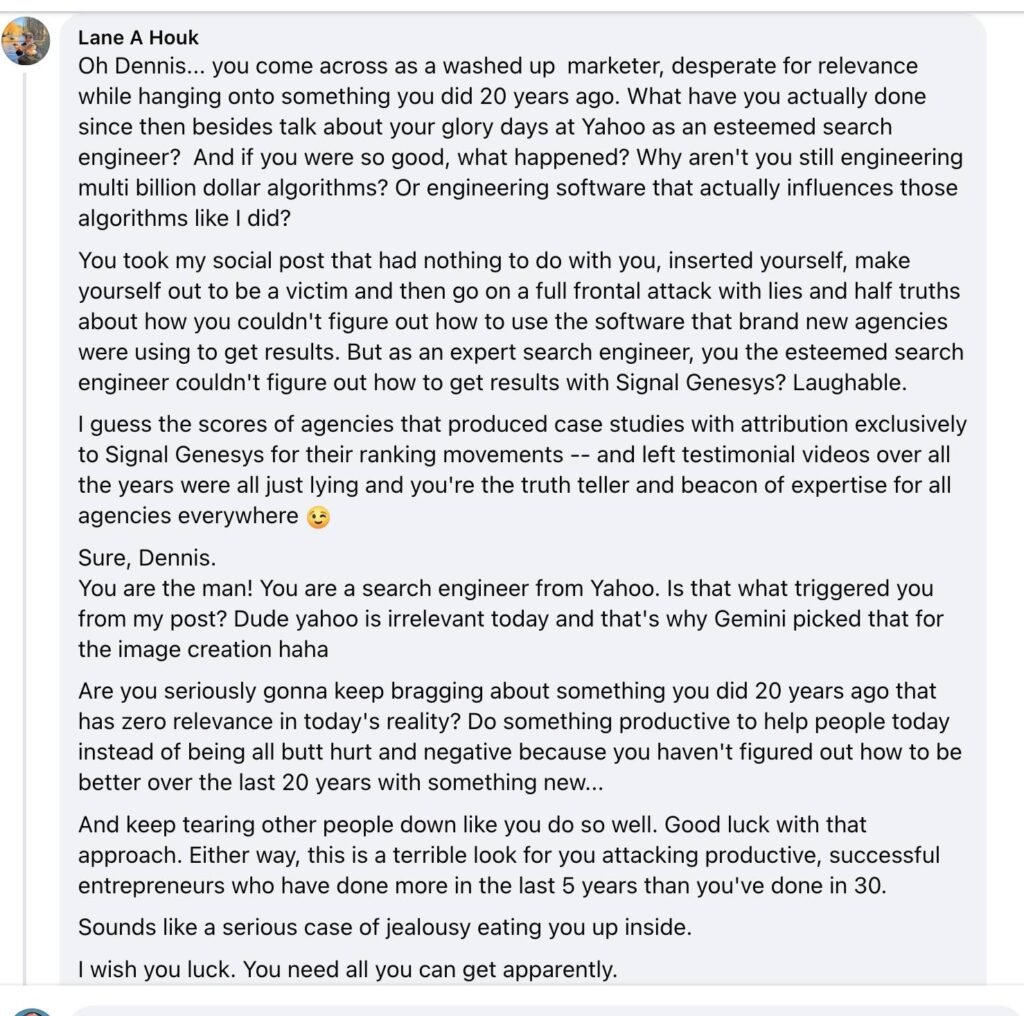
- He publicly mocked me instead of owning the failures.
- He agreed to return my money, then ghosted.
Why I Fell for Lane Houk Scam (Even as a Former Search Engineer)
I know search engines.
I know SEO rules.
Yet I got fooled.
Because:
- Lane came across as confident.
- He quoted, “It takes 20 years to build a reputation and 5 minutes to ruin it.”
He should live by that. - He offered a money back guarantee.
- He appealed to an agency like mine that tests new tools.
- He sold the idea of “press release distribution equals SEO boost.”
But what he sold didn’t match what we got.
What I Documented
- Hundreds of emails and Basecamp threads tracking our onboarding and failures.
- Zoom meetings where he demoed the software and it didn’t perform.
- Evidence: the product site ranked on zero keywords.
- No documentation or SOPs for implementation, contrary to his promises.
- Recorded claims that he was a reputation management expert, yet he failed to manage his own.
What the Metrics Showed After Using Lane Houk Tool
- Zero indexed pages after months of use.
- No keyword rankings improved for our client sites.
- ROI was negative with time, money, and manpower wasted.
When I ran the data, I expected at least small wins.
Instead, I got nothing.
Despite all these and giving Lane Houk 2 years, he still continues to attack me without addressing the real issue.
A New Escalation From Lane Houk
After I went public about the failed $10,500 project, I thought that would be the end of it.
But Lane Houk escalated again, this time in a way that crosses every ethical line.
A friend reached out to me privately.
He let me know that Lane Houk is now calling people and making disturbing personal accusations.
Specifically, he claimed that our apprenticeship program was being used for inappropriate sexual activity involving young men.
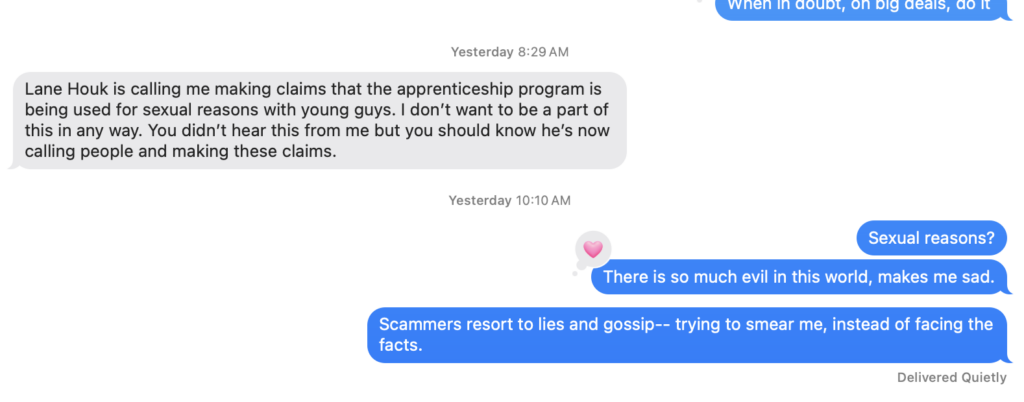
Instead of addressing the facts, Lane has chosen to spread lies.
This is the behavior of someone who has run out of answers.
What This Means for You
If you’re evaluating an SEO or software vendor, ask:
- Are results clearly documented?
- Can you inspect keyword rankings and indexation metrics from their tool or our implementation?
- Are you paying mostly up front, or does payment align with performance?
- Does the vendor have a solid track record, in their own site or client sites?
- Do they respond and fix problems, or shift blame?
My Advice to You
Be skeptical.
Do not pay large sums upfront without documented deliverables.
Track results yourself using indexation, traffic, and rankings.
Use contracts with clear refund clauses.
Choose vendors who build their own authority and deliver proof.
If you see red flags, ask questions.
If they dodge, you might be next.
Read also: The $584,800 Debt Lane Houk Never Disputes.